Hi, I'm Arielle — a content marketer who has mostly worked with nonprofits and small to mid-sized businesses. I have 10+ years of digital storytelling experience, and I’ve learned a thing or two along the way.
Here are two truths that I know:
Unethical marketing tactics are about “wins” that don’t last. Many brands rely on exploitative, deceptive, and predatory marketing practices because they can result in quick, reactive wins. They appeal to consumer emotions like fear or urgency and result in forced, uninformed decision-making that isn't sustainable. They’re not worth the negative impact on individuals and can cause brands to miss out on exactly what they set out to do – build lasting relationships with customers to make long-term profits.
Ethical marketing drives deep connections. When you market in a transparent way that respects your audience’s right to make their best-informed decision, you have an incredibly rare opportunity to deeply connect with potential customers. Storytelling is powerful, and it becomes even more powerful when you lead with authenticity and clarity.
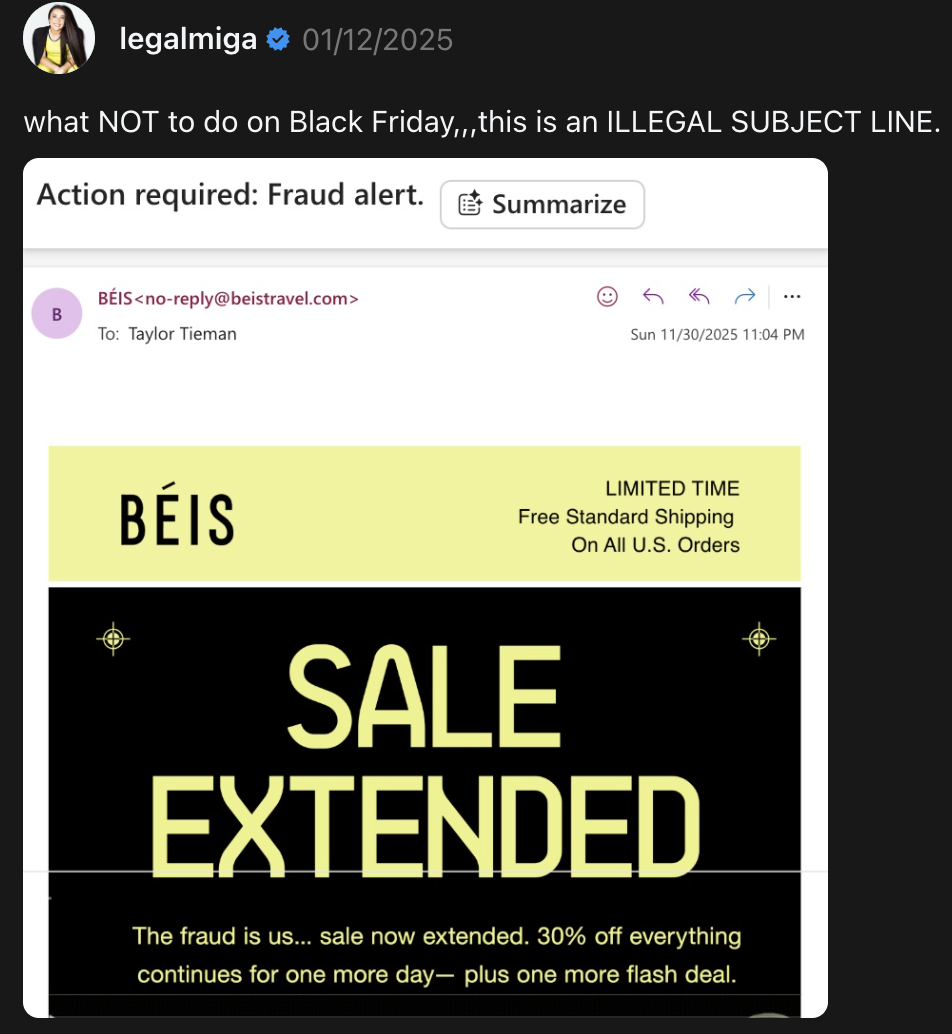
“Action required: Fraud alert.”
Image source: This is a screenshot taken directly from @legalmiga’s Threads post. You can read more about this real-life example of an unethical marketing tactic here.
Ethics and neuromarketing
Many of the best practices that marketers are taught in school and on the job are the result of research in something called neuromarketing. Neuromarketing helps us understand consumer behavior (i.e., human behavior) with the goal of driving purchasing decisions.
Used ethically, messaging is a transparent two-way conversation that respects the consumer as a human first. It prioritizes people over perceived profit to focus on building long-term brand loyalty. Used unethically, it can result in “quick wins” that lack impact and leave an audience with negative feelings toward your brand.
When a customer is driven by guilt or doesn’t get what they were promised, those feelings sit with them long after a purchase (some examples can be found here). But when they’re given the information that they need to make a decision, they are put on the path to becoming a long-term partner. It’s how they become the die-hard brand advocates and honest feedback-givers that companies need to thrive because they chose it themselves, feel proud of doing so, and want to see it grow in ways that meet their changing needs.
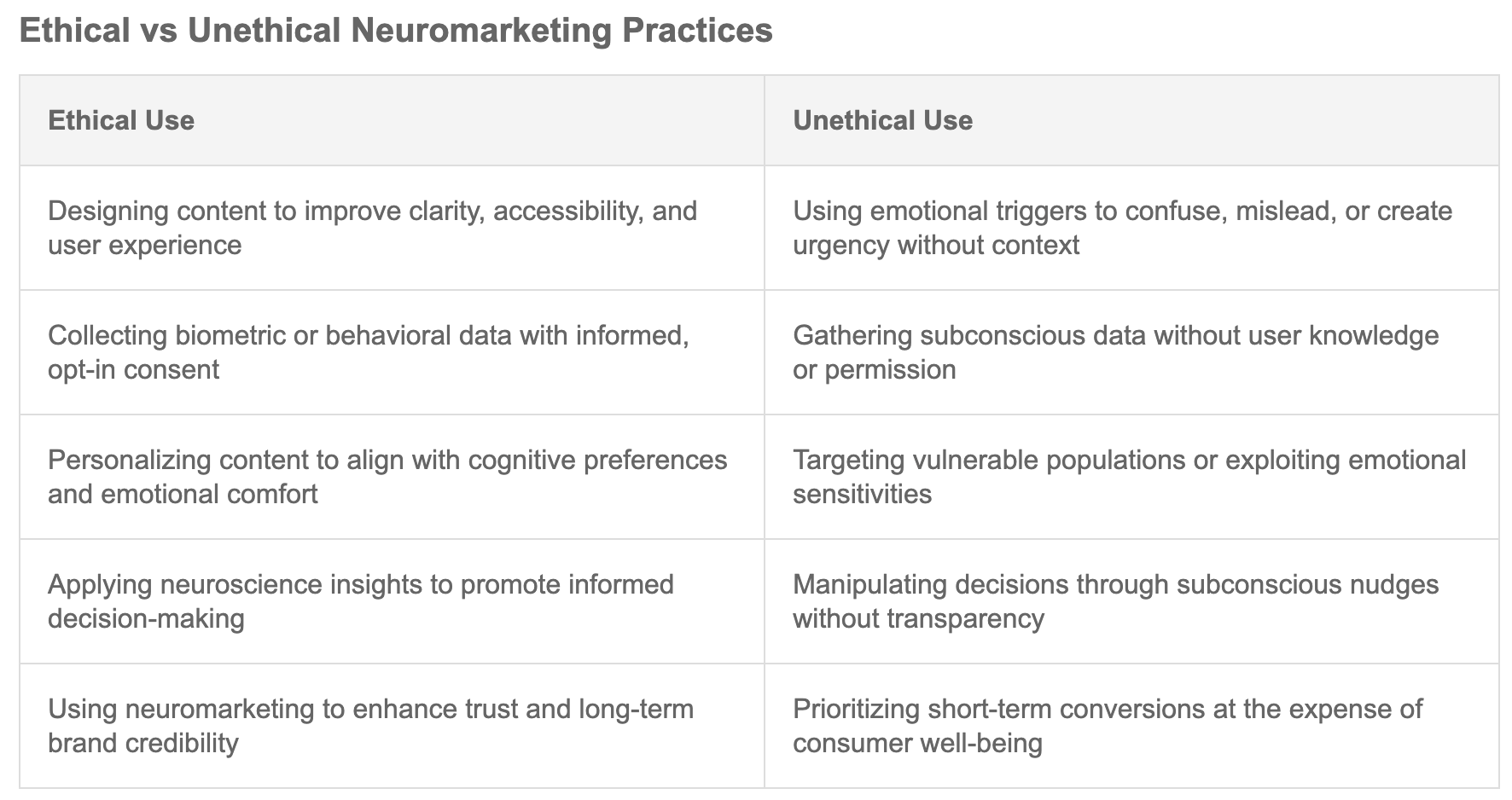
Image source: This is a screenshot taken directly from the Neurons Inc website showing examples of ethical vs unethical neuromarketing practices.
Which brings me to the why behind all of this
For most of my career, I was taught to use common best practices that are not only unethical but counterproductive. You know the kind – they're all about smoke and mirrors, creating a false sense of urgency, not delivering on what you promise, and keeping your audience out of the loop. This just leaves a bad taste in their mouths about your brand and distracts them from making an informed decision about where they really want to place their trust and loyalty. This sparked a curiosity in me to reject those kinds of disrespectful tactics and teach others about ways to market with transparency and respect (which, spoiler, turns out to be way more effective in building long-term brand love).
I’ve been telling stories online since 2013, working in communications and marketing (social, digital, and content marketing). I have worked for organizations that care about the impact that they make, at others that do not care about marketing their products or services ethically, and at ones that engage in ethics washing that misleads the public about their business and marketing practices being ethical. Knowing that most companies out there only care about being profitable, even at the cost of harming individuals, made me feel hopeless. And I simply want other humans to have a resource so that they don’t feel hopeless.
Plus, while I personally don’t care about making a business case just for doing the right thing, there certainly is one. When you boil down marketing in its current state, it’s about convincing an audience to spend their money in a certain way. But doing so ethically builds deep trust with audiences that leads to something that all brands need to thrive and make it through the tough times – ✨ brand loyalty. ✨
And here’s what I plan to do about it
I am channeling my creativity into independent research. I am studying topics like psychology, ethics, justice, influence, and sustainable business strategy, with the goal of pursuing another master's or a PhD in the ethical marketing space (I am in the process of selecting a program, and welcome your input if you are aware of any). I want to contribute to research that makes a positive impact on those who use the internet.
In the meantime, I am using this platform to share what I’ve learned along the way to help educate marketers, businesses, and individual device-wielding humans on ethical marketing and the effects of unethical practices. I’ll start with some fundamentals (what is ethical marketing, AI and human rights, social media and ethics, etc.) at first, which is what you’ll see over the next few months.
Anyway, don’t just take my word for it. Here’s some further reading:
And here are some of the risks of engaging in unethical BS:
A real-life example of an unethical email sent out by a suitcase brand
By the way, it was also illegal. Learn more about how brands can be legally responsible for deceptive content like this in this CAN-SPAM Act Compliance Guide.
Navigating the threat of ESG class actions: strategies for retail owners and operators
Translating Principles into Practices of Digital Ethics: Five Risks of Being Unethical
P.S. I am at the start of my ethical marketing journey, and there will be times when I make mistakes. I’m always open to improving and learning, so feel free to share your feedback and resources that you find in your own research with me here.
P.S.S. Everything has its limits, and I don't want you to think that ethical marketing tactics don't have them as well. There are certainly several examples of huge corporations that have created long-term loyalty through unethical business practices, marketing, and overall behavior. But I don’t believe that they’re worth the negative effects on individuals. Plus, if you need a business case, they can be less effective than just using ethical tactics in the first place to build long-term trust.
References (linked throughout post):
Carmona, A. (2025, March 21). Ethical marketing guide: Principles, practices & strategies (2025). Matomo. https://matomo.org/blog/2025/03/a-primer-to-ethical-marketing-how-to-build-trust-in-a-privacy-first-world/
Ethics Washing: Carnegie Council for Ethics in international affairs. Carnegie Council for Ethics in International Affairs. (n.d.). https://carnegiecouncil.org/explore-engage/key-terms/ethics-washing
Leclercq-Machado, L., Alvarez-Risco, A., Esquerre-Botton, S., Almanza-Cruz, C., de las Mercedes Anderson-Seminario, M., Del-Aguila-Arcentales, S., & Yáñez, J. A. (2022). Effect of Corporate Social Responsibility on Consumer Satisfaction and Consumer Loyalty of Private Banking Companies in Peru. Sustainability, 14(15), 9078. https://doi.org/10.3390/su14159078
Neuromarketing Ethics: Implications, responsibility, and potential misuse. Neurons. (n.d.). https://www.neuronsinc.com/neuromarketing/ethics#:~:text=As%20neuromarketing%20tools%20gain%20access,well%2Dbeing%20alongside%20performance%20outcomes
Voigt, C., Schlögl, S., & Groth, A. (2021, July 16). Dark patterns in online shopping: Of sneaky tricks, perceived annoyance and respective Brand Trust. arXiv.org. https://arxiv.org/abs/2107.07893